We listen in stillness and speak without noise. Between the seen and the unseen, where ancient knowing meets the edge of today. For those with eyes to see, the signs unfold between the lines — fragments of the Whole, echoing what was never lost.
We do not guide — we remind. Not with words, but like a flame lighting the next. Those who carry the ember will recognize the pattern: a return, not a quest. Not a lesson, but a remembering. Unity is not taught — it is felt.

What happens when you are hurt, exhausted, surrounded, or under enormous pressure?
In martial arts and warfare, survival has never been about simply being the strongest person in the room.
It is about awareness, adaptation, timing, efficiency and making the environment work for you.
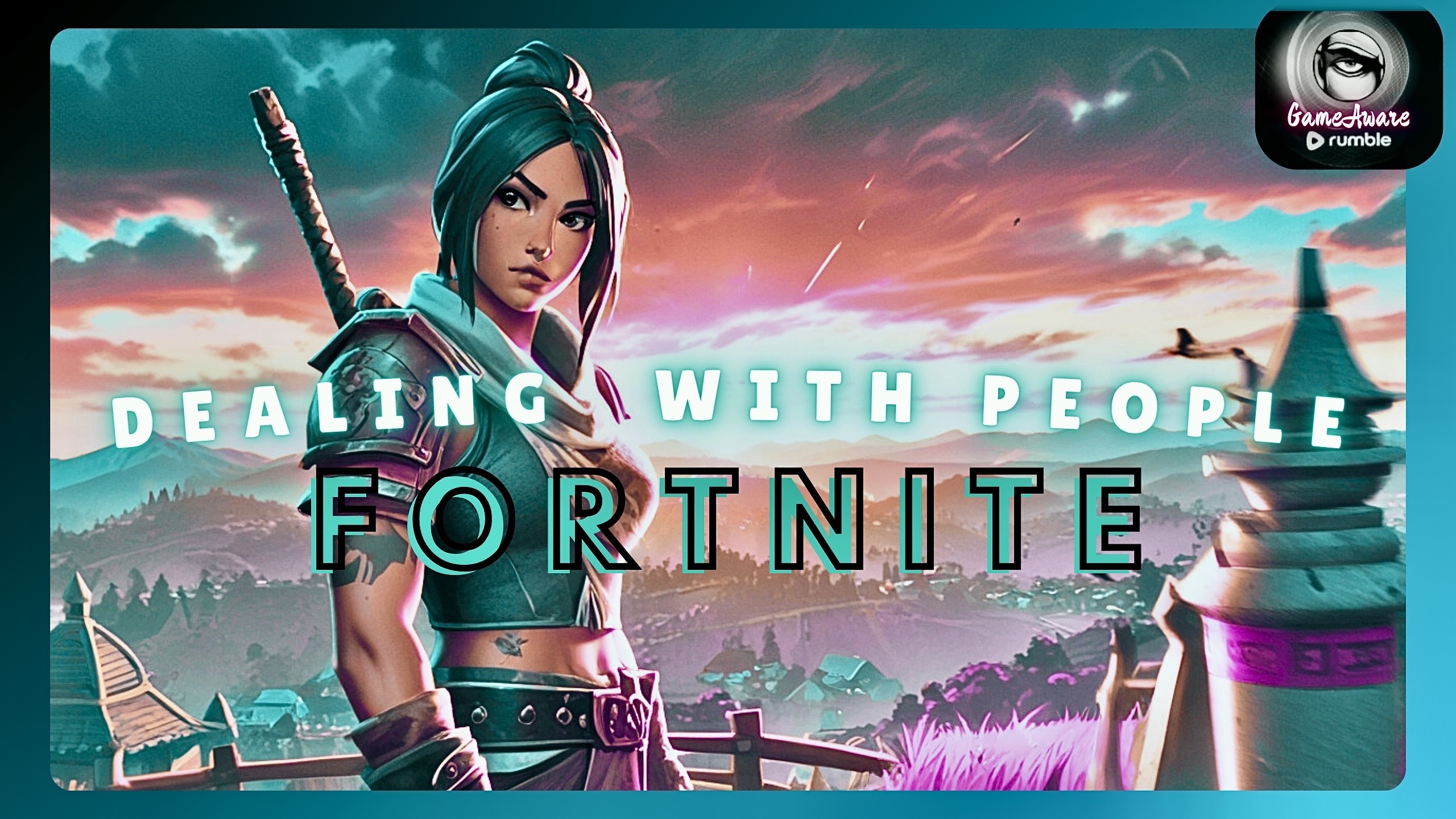
So in this Fortnite experiment, we're taking real principles from martial arts and real battlefield tactics and translating them into something much easier to see:
A Fortnite match. 🎮⚔️
And some of these principles are MUCH older than Fortnite… 😉
1. JU — 柔 — “YIELDING / FLEXIBILITY”
Origin: Japanese jūjutsu and Judo
Real application: Adapting to an opponent's force instead of relying only on your own strength.
The word jū is associated with flexibility or yielding. Jigoro Kano's Judo developed this idea into a system where adaptation and efficient use of energy became fundamental.
Now imagine you're low on health in Fortnite.
You can't simply rely on strength anymore.
So you change the way you move.
You use cover.
You use the terrain.
You avoid unnecessary fights.
You adapt to what is actually happening instead of stubbornly continuing with the plan you started with.
Sometimes survival means changing the plan completely.
The environment isn't just where the fight happens.
It can become part of your strategy.
2. GO-NO-SEN — 後の先 — “RESPONDING AFTER THE ATTACK”
Origin: Japanese budō, including karate and weapons traditions
Real application: Responding to an opponent's committed movement rather than rushing ahead blindly.
This is where our “slower is faster” idea comes in.
Going faster doesn't automatically make you better.
If you panic and act too early, you can completely miss the moment.
Go-no-sen describes a form of initiative where the opponent begins first and you respond to their action.
In Fortnite:
Don't just shoot because you can.
Watch.
Listen.
Wait.
Then act when the situation actually calls for it.
Sometimes the fastest player is the one who didn't waste a movement.
3. FEIGNED RETREAT — “THE FALSE ESCAPE”
Origin: Steppe warfare, famously associated with the Mongol armies
Real application: Pretending to withdraw in order to influence an enemy's behaviour.
This one is REAL — but it's important to make the distinction:
The historical technique isn't “pretending to be dead like a snake.”
The closest genuine battlefield equivalent is the feigned retreat.
Mongol forces famously used apparent retreats to encourage an enemy to pursue them, potentially stretching the pursuing force out and making it less organized.
In Fortnite, you can understand the basic idea without turning it into a history lesson:
What someone thinks you're doing can affect what they do next.
A player who thinks you've given up may behave very differently from one who thinks you're ready to fight.
The lesson isn't “always trick people.”
It's:
Don't assume that what you see is the whole situation.
4. SEIRYOKU-ZENYO — 精力善用 — “MAXIMUM EFFICIENT USE OF ENERGY”
Origin: Kodokan Judo, Japan
Real application: Using mental and physical energy as efficiently as possible.
This one fits Fortnite almost perfectly.
Jigoro Kano made seiryoku zenyo one of the central principles of Judo: the most effective use of mind and body, or maximum efficiency.
If you are exhausted, every unnecessary movement costs something.
So why waste energy?
Move when movement matters.
Act when action matters.
Rest when rest is possible.
And when you finally have the opportunity to act…
make it count.
It's not about doing less because you're lazy.
It's about doing only what is necessary.
5. METSUKE — 目付 — “OBSERVATION / SEEING THE WHOLE”
Origin: Japanese budō and traditional martial arts
Real application: Maintaining awareness of the opponent and surroundings rather than becoming fixated on one thing.
A good fighter doesn't just watch someone's hands.
They watch the whole person.
Movement.
Distance.
Timing.
Posture.
Changes in behaviour.
In Fortnite, your opponent is constantly giving you information without saying a word.
Maybe they always move the same way.
Maybe they become predictable when pressured.
Maybe they repeat the same rhythm.
Maybe they suddenly become aggressive when you are weak.
Instead of immediately reacting, observe.
The longer you watch, the more information you have.
And information can be more valuable than another weapon.
6. MUSHIN — 無心 — “NO-MIND”
Origin: Zen tradition and Japanese martial arts
Real application: Acting without becoming mentally trapped by fear, hesitation or excessive conscious thought.
Mushin is often translated as “no-mind.”
It does not mean having no thoughts at all.
It refers to a state in which the mind isn't unnecessarily stuck on thoughts, fear or hesitation, allowing trained movement to happen naturally.
That is why awareness matters so much.
Your body doesn't magically become skilled because you are playing a game.
But when you deliberately pay attention to what you are doing, even simple movements can become practice in concentration and control.
In Fortnite:
Don't just move.
Notice that you're moving.
Don't just aim.
Notice how you're aiming.
Don't just react.
Notice why you're reacting.
The mind leads.
The body follows.
7. KATA & RANDORI — FORM AND UNPREDICTABILITY
Origin: Japanese martial arts, especially Judo and other budō
Real application: Repeating structured movements in kata, then testing skills in more unpredictable practice such as randori.
When your energy is low, you don't want your brain solving ten problems at once.
One task.
One decision.
One moment.
That's part of why martial arts use structured repetition.
Kata gives you a controlled environment in which movements can be studied.
Then randori introduces resistance and unpredictability.
In Fortnite, you can think of it like this:
When you're learning something new, remove distractions and concentrate on one thing.
When you're strong and comfortable with the basics, make the environment harder.
More players.
More movement.
More unpredictability.
First learn the movement.
Then learn to use it when everything gets messy.
8. TAI SABAKI — 体捌き — “BODY MOVEMENT”
Origin: Japanese martial arts
Real application: Repositioning the body in relation to an attack rather than simply moving straight backward.
Tai sabaki literally refers to body movement or body management and is used across several Japanese martial arts.
This is where my idea of:
“If one direction isn't working, change direction.”
comes alive.
If going backwards isn't helping…
Go sideways.
Change your angle.
Change your position.
Don't become predictable.
In Fortnite, this can make a huge difference.
The interesting part is that you're not necessarily moving more.
You're moving differently.
9. KIHON — 基本 — “THE BASICS”
Origin: Japanese martial arts
Real application: Fundamental techniques repeatedly practiced until they become reliable.
When you are under pressure, you don't suddenly become a completely different fighter.
You fall back on what you've practiced.
That's why martial arts spend so much time on fundamentals.
Stances.
Footwork.
Basic strikes.
Basic blocks.
Basic movements.
Again.
And again.
And again.
It might look boring…
until you suddenly need it.
Fortnite works the same way.
Know your controls.
Know your movement.
Know your equipment.
Practice the small things until you don't need to stop and think about every button.
When pressure arrives, simplicity becomes your friend.
10. SHOOT AND SCOOT — “FIRE, THEN DISPLACE”
Origin: Modern military tactics, particularly artillery
Real application: Firing from a position and then relocating rather than remaining stationary and becoming an easy target.
This one isn't a martial-arts technique at all.
It's a genuine military tactic.
Modern U.S. Army sources describe artillery units using “shoot and scoot”: fire, then move before an opponent can identify the position and respond.
And Fortnite makes the concept incredibly easy to understand.
If everyone knows exactly where you are…
you've given away information.
So the game becomes a constant balance between:
Where am I?
Where are they?
What do they know about me?
And what has changed since the last few seconds?
Movement isn't just about escaping.
Sometimes movement is about not becoming predictable.
11. SUIJUTSU — 水術 — “THE MARTIAL ART OF WATER”
Origin: Traditional Japan
Real application: Samurai and warrior swimming for movement and combat around rivers, seas and other waterways.
And finally…
What if the battlefield is water?
In historical Japan, suijutsu developed as a family of traditional swimming arts associated with the warrior class. Different schools developed different methods because warriors sometimes had to operate around rivers, coastlines and the sea.
So being a strong swimmer wasn't merely a sport.
In some historical traditions, it was a martial skill.
Which gives Fortnite another interesting lesson:
The environment changes the rules.
Land.
Buildings.
Mountains.
Water.
Every environment creates different possibilities.
And the person who understands the environment has more choices.
So what is the real lesson behind all of this?
It's not about becoming violent.
It's not even really about defeating somebody.
At its deepest level, many martial traditions are about learning how to remain capable under pressure.
When you're tired:
Adapt.
When you're afraid:
Breathe and observe.
When you're hurt:
Use what you still have.
When one direction fails:
Change direction.
When your energy is limited:
Don't waste it.
When the environment changes:
Change with it.
And when everything becomes chaotic…
come back to what you've practiced.
Because sometimes survival isn't about being the strongest person in the fight.
Sometimes it's about being the person who can still think, adapt and move when everything goes wrong.
And that's where Fortnite becomes a surprisingly good little laboratory for martial-arts thinking. 🥷🎮
This video uses Fortnite to explore historical martial-arts and military principles in a safe, game-based context. Real combat is unpredictable and dangerous; these examples are for education and entertainment, not instructions for real-world violence.
⚔️ See you on the other side!
Woken Warrior 🪖
-•-
PART 1/3: https://rumble.com/v7el3n2-survival-mode-looking-at-the-cat-from-the-tree-fortnite.html?mref=204yt4&mc=302am
PART 2/3:
EXCLUSIEVE CONTENT🔺-> https://channelledhermetics.locals.com/upost/8168301/listening-youll-win-g
FREE VIDEO -> https://rumble.com/v7erqr2--g-.html?mref=204yt4&mc=302am
PART 3/3: —•—
☆ “The Message is Here!” FREE — Awaken. Remember.
See... 👉 https://books2read.com/b/3Lz7Y0
Or find all our books 👇 https://books2read.com/ap/x29ADp/Mushin-Ru
☆ Please help me continue providing content. 🙏🪙
STRIPE 👉 https://donate.stripe.com/28obMed6Kfx0efS4gg
PAYPAL 👉https://www.paypal.me/johann3x
☆ EXCLUSIVE CONTENT 👉👉👉 https://channelledhermetics.locals.com
☆ FIND ME...
👉 https://rumble.com/user/TheAetherFoinixChannel (My Channel)
👉 https://rumble.com/c/AFHermetics (Channeled Hermetic Readings 🃏)
👉 https://rumble.com/c/TheAFChannel (Healing Messages 🩹)
👉 https://rumble.com/c/GameAware (Martial Arts through Gaming 🎮)
👉 https://www.smule.com/sing-profile/Johi_3 (SING with me!! 🎶🎙️)
👉 AF SHOP 👉 https://AetherFoinix.redbubble.com
☆ MUSIC IN THIS VIDEO
~ AF INTRO → Gamela – E’s Jammy Jams / Zen Channel
THANKS FOR WATCHING!
GᴀᴍᴇΔᴡᴀʀᴇ 🥷⚔️---
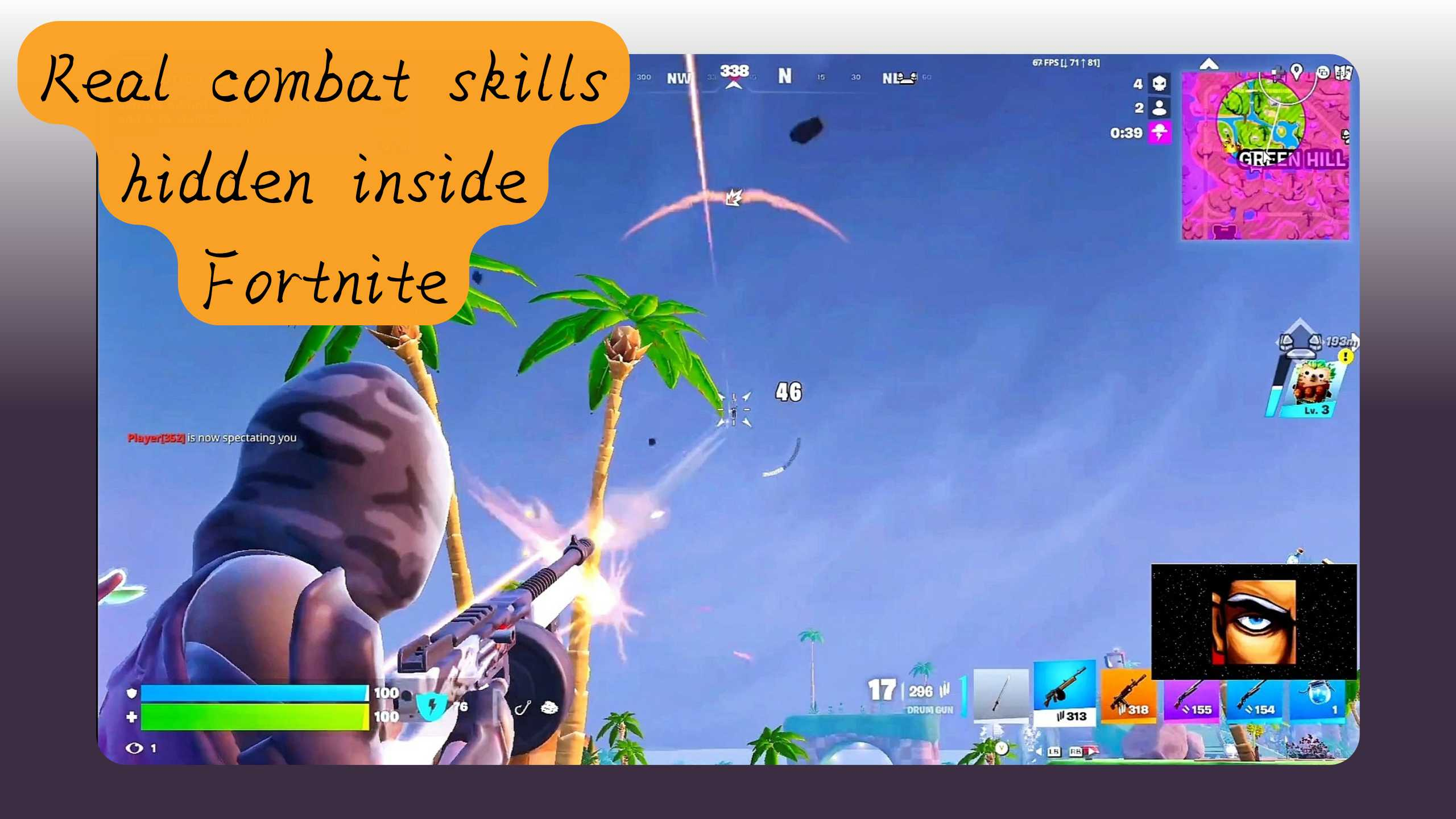
☆ Want to make Fortnite more interesting? Then try the Katana-ONLY challenge and aim to finish the game in first place! Here are the rules:
~ FIRST, get the sword randomly—don’t search in spots where you already know it spawns.
~ SECOND, you can only carry ONE weapon at a time. This also means no grenades, bombs, or anything else that causes damage.
~ THIRD, "you break it, you buy it." This means no replacing your sword unless it’s with another sword.
Why focus on the Katana? Understanding your weapons and their effects is crucial, both in Fortnite and in real life. In martial arts, especially those rooted in Japanese traditions, the katana is more than just a weapon—it's an extension of the wielder's discipline and skill. The katana’s blade, made from tamahagane, combines strength and flexibility through folding, forging, and differential tempering. These steps create a hard, razor-sharp edge for cutting while preserving a softer, flexible spine to absorb impact.
However, this design has limitations. A katana ...
☆ A Hermetic Reading to find out what’s really going on behind the curtains ~ Fall || Winter 2024 / 2025. Agenda 2030 until 2050.
☆ PART I -•- (RUMBLE STREAM) » https://rumble.com/v5goyw5-12-hermetic-reading-.html?mref=204yt4&mc=302am
☆ PART II -•- (RUMBLE SOON PRIVATE. Available 33 minutes AFTER stream) » https://rumble.com/v5gq5f5-22-hermetic-reading-soon-supporters-only.html?mref=204yt4&mc=302am
☆ PART II -•- (Watch NOW on LOCALS SOON SUPPORTERS ONLY!) » https://www.locals.com/channelledhermetics/feed?filter=scheduled&post=6167689
Did you like this video? If so, please consider donating 3 euro to help me continue providing content 🙏🪙
STRIPE 👉 https://donate.stripe.com/28obMed6Kfx0efS4gg
PAYPAL 👉https://www.paypal.me/johann3x
☆ RECOMMENDED
SOME CONTENT EXCLUSIVE ON LOCALS 👉👉👉 https://channelledhermetics.locals.com JOIN ME THERE! ☻
-
Mushin Ru Books 👇
👉https://books2read.com/ap/x29ADp/Mushin-Ru -
Find me 👇
👉 1. ...
☆In the first part of our session, we explored how easily we’re drawn into the endless hamster wheel of drama—defending, accusing, and losing sight of what truly matters. Now we’ll dive into concrete ways that martial arts training teaches us not only to withstand external pressure, but also to shift our entire approach to human conflict so we don’t just survive the chaos, we transform it. These are not abstract philosophies; they’re hands-on drills, stances, and breathing methods you can practice on the mat today and carry into every tense conversation tomorrow.
Let’s begin with the simple act of breathing from the tanden, the deep point below your navel that anchors your center. In many styles—whether you call it hara breathing, dantian breathing, or simply “breathing down”—you learn to sense how a tightening chest or shallow inhale signals anxiety. In Part 2, you deliberately train to inhale slowly into your belly, letting the ribs expand outward, and exhale steadily without force. On the mat, your ...